If you're wondering how much tummy time your baby needs, you're not alone. Tummy time…

Adolescent Scoliosis Newcastle: Signs, Symptoms & Treatment Options
Adolescent Scoliosis Newcastle: Signs, Symptoms & Treatment Options
What Is Adolescent Scoliosis?
Adolescent scoliosis is a condition where a teenager’s spine develops an abnormal sideways curve, often accompanied by rotation or twisting of the vertebrae. Families searching for information about Adolescent Scoliosis Newcastle commonly notice posture changes during the rapid growth phase between ages 10 and 18, when scoliosis most frequently develops, often while seeking broader guidance around children’s and adolescent spinal health.
Most adolescents with scoliosis are otherwise healthy, and while the exact cause is often unknown, research suggests a combination of genetic and environmental factors may contribute to its development.
The severity of adolescent scoliosis can vary significantly. Some teenagers may only develop a mild curve that causes subtle posture changes, while others may experience more noticeable spinal asymmetry, uneven shoulders, rib prominence, or leaning posture.
Early scoliosis screening and monitoring are important because spinal curves can progress during growth spurts. Timely assessment can help guide appropriate management and support long-term spinal health, particularly when monitoring changes associated with scoliosis progression and adolescent spinal development.
Key Statistics About Adolescent Scoliosis
Adolescent scoliosis affects approximately 2% to 3% of children aged 10 to 18
Girls are significantly more likely to develop curves requiring treatment
Most cases are classified as idiopathic scoliosis, meaning the exact cause is unknown
Scoliosis progression is more likely during periods of rapid growth
Common Causes of Adolescent Scoliosis
While many cases are classified as idiopathic scoliosis, several contributing factors may influence spinal development during adolescence.
Potential contributing factors include:
- Genetic predisposition or family history
- Rapid adolescent growth spurts
- Uneven muscle development or spinal loading
- Neuromuscular conditions (less common)
- Underlying congenital spinal abnormalities
Although posture itself does not cause idiopathic scoliosis, poor postural habits may sometimes exaggerate the appearance of spinal asymmetry and muscular imbalance.

Signs of Scoliosis in Teenagers
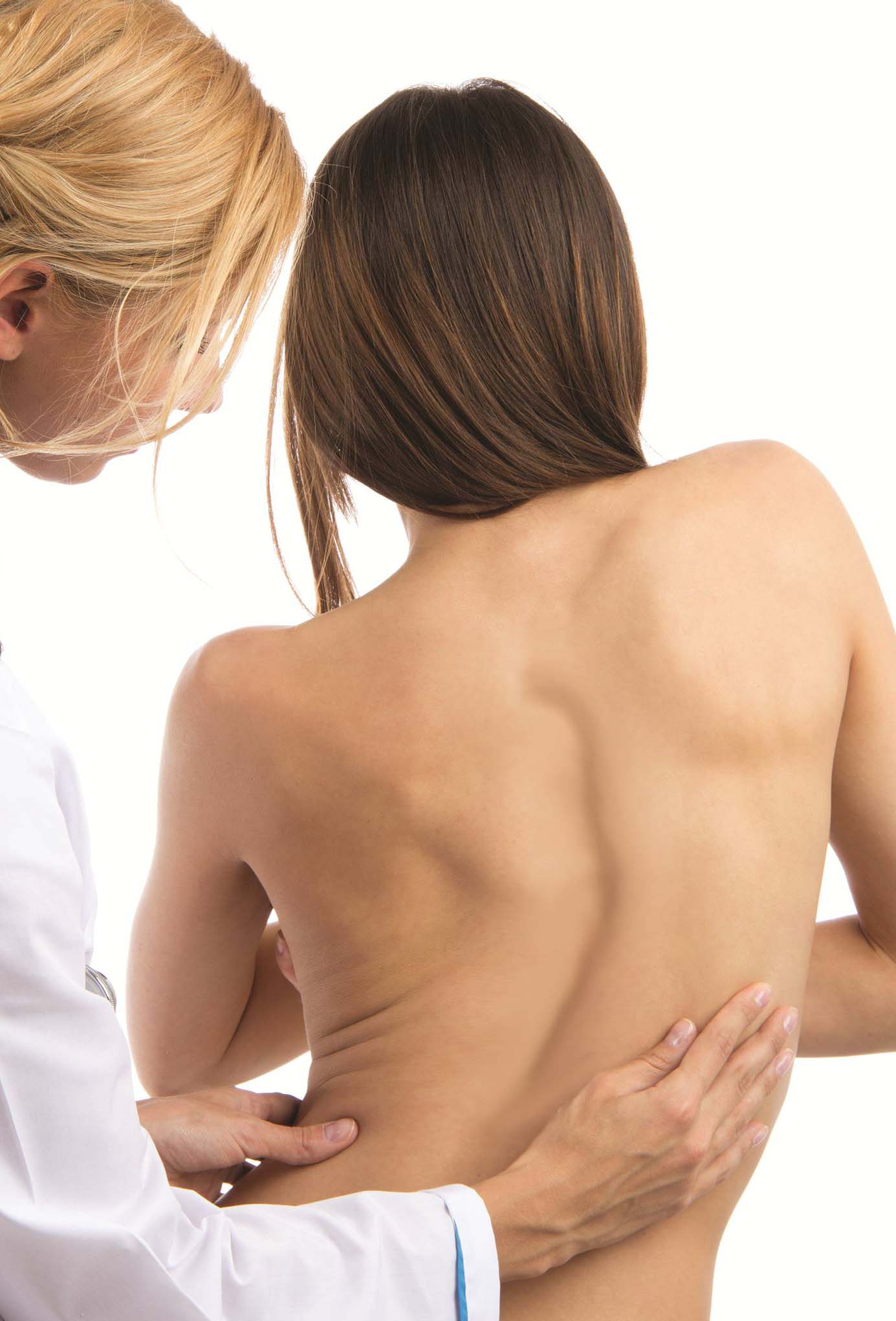
Recognising the early signs of scoliosis in teenagers can be challenging because symptoms often develop gradually and without pain.
Parents may notice subtle scoliosis posture changes such as:
- Uneven shoulders
- One shoulder blade appearing more prominent
- One hip sitting higher than the other
- Rib prominence when bending forward
- Leaning posture
- Clothing fitting unevenly
- Head appearing off-centre over the pelvis
- Back pain or muscular tightness
Many teenage scoliosis symptoms are first noticed during growth spurts or while wearing fitted clothing or swimwear.
If any of these changes are observed, a professional scoliosis assessment is recommended.

Adolescent Scoliosis and Mental Health
Adolescence is an important stage for confidence, self-esteem, and body image development. Visible scoliosis posture changes can sometimes affect a teenager emotionally and socially.
Teenagers with scoliosis may experience:
- Self-consciousness about posture
- Anxiety regarding appearance
- Reduced confidence
- Social withdrawal
- Emotional stress associated with bracing or treatment
Providing reassurance, education, and supportive healthcare guidance is an important part of Adolescent Scoliosis Newcastle management.
Open communication between parents, teenagers, and healthcare providers can help teenagers feel supported throughout their scoliosis journey.

Can Chiropractic Care Help Adolescent Scoliosis?
Chiropractic care may play a supportive role within a multidisciplinary approach to adolescent scoliosis management.
A scoliosis chiropractor may assist with:
- Improving spinal mobility
- Supporting posture awareness
- Reducing muscular tension
- Improving movement patterns
- Providing scoliosis rehabilitation exercises
- Supporting overall spinal function
However, it is important to understand that chiropractic care alone cannot stop the progression of idiopathic scoliosis.
Management recommendations depend on several factors including:
- Age
- Skeletal maturity
- Curve severity
- Risk of progression
In some cases, co-management with scoliosis specialists and spinal bracing providers may be recommended.
At Family Life Chiropractic, we maintain referral relationships with providers such as ScoliCare to help support families requiring multidisciplinary scoliosis care and monitoring.
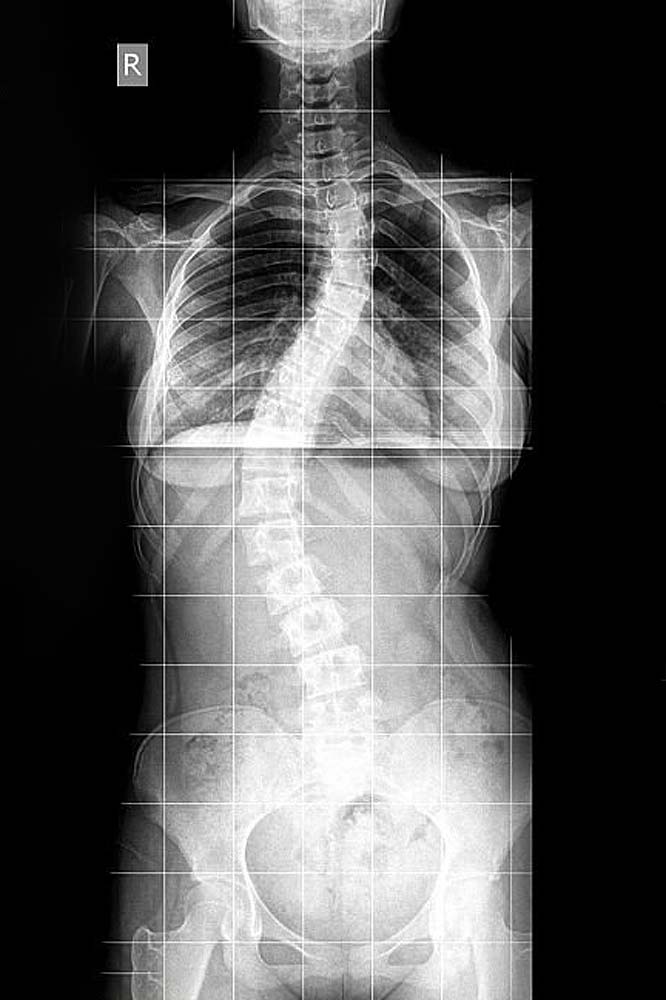
Understanding the Mechanism Behind Adolescent Idiopathic Scoliosis
While the exact cause of adolescent idiopathic scoliosis remains unknown, current research strongly suggests that genetic factors play an important role in its development. Adolescent idiopathic scoliosis often occurs in otherwise healthy teenagers and may be seen more commonly in families with a history of scoliosis, indicating a likely inherited component.
Although the underlying cause is not fully understood, the structural changes occurring within the spine can often be observed and explained in greater detail. Research suggests that scoliosis may develop when spinal joints, vertebrae, and growth plates grow at uneven rates during adolescence. As one side of the spine grows differently to the other, rotational forces may develop through the spinal joints, causing the spine to gradually twist and curve into the three-dimensional spinal patterns associated with scoliosis.
Potential contributing factors that may influence scoliosis development or progression include:
- Genetic predisposition or family history
- Rapid adolescent growth spurts
- Uneven spinal loading and growth patterns
- Neuromuscular conditions (less common)
- Underlying congenital spinal abnormalities
Although posture itself does not cause idiopathic scoliosis, poor postural habits may sometimes exaggerate the appearance of spinal asymmetry, muscular imbalance, and uneven shoulder or pelvic positioning.

Not Every Posture Change Means Scoliosis
It is important to remember that not every posture irregularity or uneven shoulder indicates adolescent scoliosis.
Many teenagers develop postural adaptations related to:
- Rapid growth
- Sports participation
- Heavy school bags
- Prolonged sitting
- Device use
- Muscular imbalance
However, because spinal curves can progress during adolescence, any concerning posture changes should still be professionally assessed. As an experienced Newcastle practice that has helped many families navigate scoliosis over the past 20 years, we understand the importance of providing clear explanations, reassurance, and guidance throughout the assessment process. We take the time to explain your teen’s examination findings and, if clinically appropriate, can arrange bulk-billed spinal imaging for further evaluation.
For adolescent scoliosis assessment, we strongly recommend an EOS scan — an advanced low-radiation imaging system that captures a full-body standing scan of the spine in approximately 20 seconds. Unlike traditional X-rays, EOS imaging assesses the spine in a natural weight-bearing position, providing highly accurate measurements of spinal curvature, posture, and alignment while exposing growing teenagers to significantly less radiation. This makes EOS scanning one of the safest and most effective imaging options for monitoring scoliosis progression during adolescence.
When Should You Seek a Scoliosis Assessment?
You should consider arranging a scoliosis assessment if your teenager develops:
- Uneven shoulders or hips
- Rib prominence
- Leaning posture
- Persistent back discomfort
- Visible posture changes during growth spurts
- Family history of scoliosis
Early assessment and monitoring provide the best opportunity to manage scoliosis progression appropriately and support healthy spinal development. If you are concerned about posture changes or a teenage spine curve, arranging an assessment for adolescent scoliosis Newcastle can help identify whether further monitoring or imaging is required.
If you would like to learn more about scoliosis assessment, monitoring, and supportive care options, visit our dedicated scoliosis assessment Newcastle page or book online to arrange an appointment.

Related Posts


